
Dar es Salaam – Tanzania’s copyright office has launched its first distribution of Sh1.38 billion raised through a levy on devices used to copy and store creative works, extending payments to writers, filmmakers and other creators alongside musicians.
The distribution covers music, film, written works, crafts and performing arts. At the same event, officials called for the levy to cover more widely used technology, including phones, computers and flash drives, rather than relying on a list that includes CDs and DVDs.
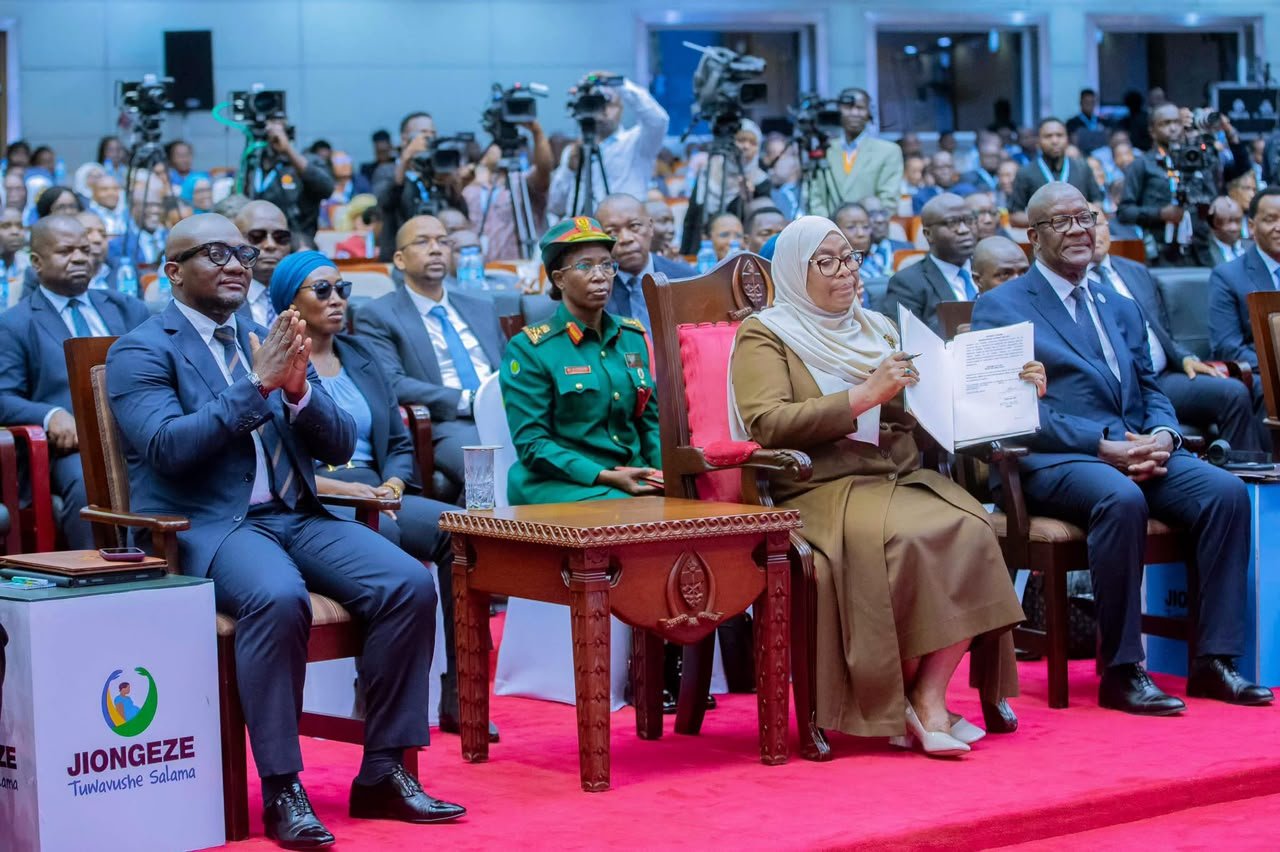
The ceremony took place at Johari Rotana in Dar es Salaam on November 26, 2026. Deputy permanent secretary Methusela Ntonda represented Information, Culture, Arts and Sports Minister Paul Makonda.
Naomi Mungure, acting chief executive of the Copyright Office of Tanzania (COSOTA), said the payment represented 60 per cent of approximately Sh2.3 billion collected by the Tanzania Revenue Authority (TRA) between September 2023 and June 2026.
She distinguished the new payout from earlier royalty distributions, which largely benefited music rights holders through payments for public performances and broadcasting. This was the first distribution of proceeds from the device-based copyright levy across five creative categories, she said.
Sharing the proceeds
The Finance Act, 2022 introduced a 1.5 per cent levy on specified recording equipment and media. The 2023 levy regulations, read with their subsequent amendment, provide for collection by TRA from importers or local manufacturers.
READ MORE: Artists in Tanzania Demand Creative Freedom: ‘We’re Being Censored’
The charge applies to specified goods, rather than to each use of a particular creative work. It is distinct from the remuneration required under the Copyright and Neighbouring Rights Act when commercially published sound recordings are broadcast or publicly performed.
Mungure said 20 per cent of the collections was allocated to COSOTA’s operating costs, 10 per cent to the Culture and Arts Fund and another 10 per cent to the government. The remaining 60 per cent was for artists and writers.
Ntonda described the combined allocation to creators and the Culture and Arts Fund as a 70 per cent benefit to the creative sector. That includes funding for wider cultural activities, rather than a 70 per cent direct cash distribution to individual creators.
Mungure said payments would be channelled through licensed collective management organisations for music, film and literary works. COSOTA would handle the crafts and performing-arts allocations while those sectors worked towards establishing their own organisations, she said.
COSOTA’s official licensing records identify the Society of Music Advocacy (SOMA), Tanzania Audio Visual (TAVIC), and Tanzania Reproduction Rights Society Limited (TANRRS) as licensed organisations covering those three fields.
The 2022 reforms changed COSOTA’s statutory framework from a copyright society to a copyright office responsible for licensing and supervising collection organisations. The revised law preserves the office’s collection and distribution functions where those organisations do not operate.
READ MORE: Zeinah’s Anger, a Century Later: What a 1926 Mambo Leo Column Still Teaches Us
Representatives of writers and filmmakers welcomed their inclusion, arguing that recognition of creative work needed to translate into income for the people producing it. The TANRRS representative said written works had too often been treated simply as educational material, rather than as part of the creative economy.
A SOMA representative highlighted the contributions of songwriters, composers and producers whose work may be less visible than that of the singer. For some recipients, she said, royalty income could pay school fees or finance a return to the studio to complete unfinished work.
Ntonda also outlined separate music-royalty distributions, including income from digital uses of Tanzanian works in South Africa. Those payments were additional to the device-levy allocation.
Outdated device coverage
Mungure said the office had proposed 25 categories of devices but obtained approval for 13. She argued that the approved list needed updating to reflect how creative content is now copied, stored and consumed.
“Phones, flash drives and computers are widely used,” she said, contrasting them with CDs and DVDs that were more common in earlier years.
COSOTA was working with the ministry to seek broader coverage, she said. Adding devices used more frequently could increase the amount available to creators, although the proposed expansion was not announced as an approved change.
READ MORE: Chatting With GPT: A Crocheter’s Observations
Mungure said collections of approximately Sh2.3 billion over nearly three years showed the need to strengthen the system. She urged legislators and the ministry to support changes that would bring the levy into line with current technology.
Ntonda acknowledged technological change as a continuing challenge. He said the government would keep working to improve the protection of artists’ and writers’ interests.
The payout therefore marks both the implementation of a new revenue source and a discussion about whether its current scope reflects the market in which creative work circulates.
Rights and enforcement
Representatives of the film sector said forming a collection organisation was intended to help filmmakers earn a living from work that continues to entertain audiences after production is complete. They called for stronger government backing to make the system effective.
“A licence alone is not enough,” the TAVIC representative said, asking the ministry to strengthen recognition of the organisation and examine the legal arrangements supporting its collection and distribution work.
Ntonda said collection organisations had to operate transparently, accountably and with good governance. He warned that the ministry would act against those failing to comply with their licences.
READ MORE: Abdilatif Abdalla Turns Nyerere Writing Awards Into a Call for Literary Ambition
“The ministry will not hesitate to take action under the law against companies that violate their licence conditions,” he said.
He encouraged creators to join their relevant collection organisations and register or update their work records with COSOTA. Mungure said accurate records helped identify rights holders and manage the income associated with their works.
Parliamentary committee representative Colonel Lucas Magembe pledged support for proposals brought through the legislative process to strengthen protection for artists. He said the committee overseeing the ministry would continue working with creators on their concerns.
Former COSOTA board chairman Victor Tesha urged artists to combine copyright protection with financial literacy and investment. He argued that income from creative work should help build assets and provide security when age or changing technology limits future earnings.
Tesha also proposed investing collected royalties in financial instruments before distribution to generate additional income. He presented this as a suggestion, rather than an adopted COSOTA policy or a guaranteed return to beneficiaries.
“Let us not build fame for one season. Let us build wealth for future generations,” he said.