
Dar es Salaam – A five-year US$85 million partnership to improve maternal and newborn care has been announced as President Samia Suluhu Hassan called for stronger regional accountability to prevent deaths during childbirth and ensure health services reach women and children regardless of where they live.
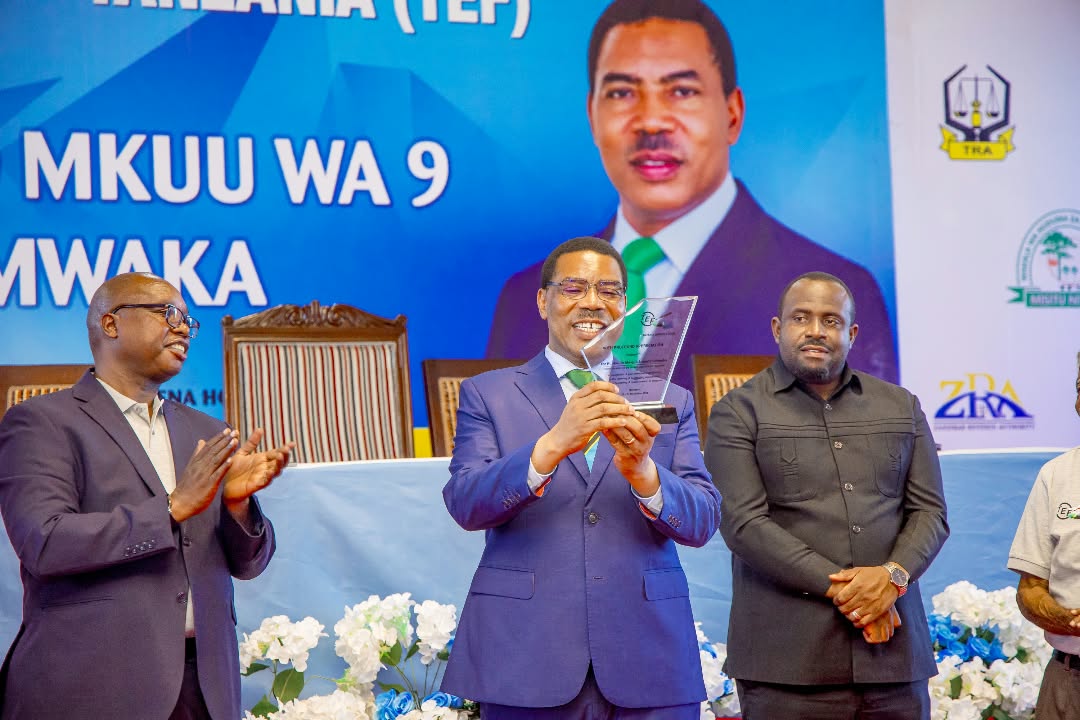
The commitment from the Beginnings Fund was announced at the third national scientific conference on reproductive, maternal, newborn, child and adolescent health and nutrition. President Samia addressed the gathering at the Julius Nyerere International Convention Centre on November 26, 2026, alongside the signing of agreements on maternity facilities and regional oversight.
Beginnings Fund chief executive Alice Kang’ethe said US$75.4 million would be allocated to mainland Tanzania and US$9.6 million to Zanzibar. The mainland partnership would support 210 facilities handling large numbers of patients, aiming to reach approximately 7.3 million women and newborns over five years, she said.
The announcement accompanied the launch of a national reproductive and child health plan for 2026–2030 and a mortality report that President Samia said put maternal deaths for 2024/25 at 76 per 100,000 live births. She also reported newborn mortality of 17 per 1,000 live births and under-five mortality of 28 per 1,000.
While speakers welcomed progress, they identified persistent staffing shortages, unequal access, malnutrition and failures in emergency care. President Samia stressed that access to quality services should not depend on income, social status or location.
“The right to quality health care should not depend on where someone lives, their income or their status,” she said.
Financing better care
Kang’ethe said the partnership would invest in health workers, equipment, medicines and the systems needed to deliver safe maternal and newborn care. Implementation would be led by the government through the Health Ministry and the Prime Minister’s Office, responsible for regional administration and local government, known as TAMISEMI.
READ MORE: Nutrition Review Exposes Stalled Health Projects Despite Funding
She identified implementing partners including Ifakara Health Institute, Haydom Hospital, the Benjamin Mkapa Foundation, Doris Mollel Foundation and Muhimbili National Hospital, alongside other organisations and professional associations.
“We know what it takes to save the lives of our moms and newborns. Solutions exist,” Kang’ethe said.
The Beginnings Fund deploys philanthropic funding in partnership with African governments, concentrating on the health workforce, life-saving products and stronger data and referral systems.
A separate agreement with Amsons Group covered construction of maternity and child-health wards in 11 councils across nine regions, including Zanzibar. The group’s managing director, Edha Nahdi, said construction was expected to take between 24 and 30 months.
He identified locations in Ruvuma, Tabora, Singida, Geita, Songwe, Mwanza, Mara and Dar es Salaam, as well as Zanzibar. He said work had already begun at Mbagala on Kilwa Road in Dar es Salaam.
President Samia said specialised newborn wards had increased from 14 in 2018 to 438 by 2025. Discussions were also underway on establishing another 26 units for babies born prematurely, she said.
Measuring progress
Health Minister Mohamed Mchengerwa said the new mortality report drew on routine health information systems, with specialists from statistical offices, research institutes and universities involved in calculating the indicators. Previously announced mortality figures had relied on the 2022 Tanzania Demographic and Health Survey and Malaria Indicator Survey.
READ MORE: Samia Offers 60 Specialist Scholarships as Africa Launches 2026–2030 Maternal and Child Health Roadmap
The 2022 household survey estimated maternal mortality at 104 per 100,000 live births over the preceding seven years. Its newborn and under-five estimates, at 24 and 43 per 1,000 respectively, covered the preceding five years rather than calendar year 2022 alone.
World Health Organisation guidance notes that facility data may miss outcomes outside facilities and recommends checking routine statistics against population surveys. The new figures should therefore not automatically be treated as a like-for-like comparison with the household survey without checking coverage, definitions and reference periods.
Mchengerwa said the shift would allow the government to assess performance annually and examine individual regions and districts. He urged regional commissioners to know where deaths were occurring and investigate their causes, rather than relying only on national summaries.
President Samia described the latest figures as evidence that investment and the work of midwives, nurses and doctors were producing results. She said the government expected further progress by 2030.
The Sustainable Development Goals aim to bring the global maternal mortality ratio below 70 per 100,000 live births by 2030. They also call for all countries to reduce newborn mortality to 12 or fewer per 1,000 live births and under-five mortality to 25 or fewer.
She said the national plan would prioritise emergency obstetric and newborn services, vaccination and nutrition, alongside deployment of staff to underserved areas. Its implementation would form part of the wider African maternal and child health agenda she leads as the African Union’s champion.
READ MORE: Tanzania’s Health Insurance Scheme Opens to All Income Groups — But Can It Deliver Care?
The conference followed the November 23 launch in Addis Ababa of the continental roadmap for 2026–2030. Health Ministry permanent secretary Grace Magembe said about 3,000 participants had gathered to exchange research findings and practical experience, with the previous conference held in 2023.
Scrutinising every death
President Samia signed a commitment with mainland regional commissioners on reproductive, maternal, child and adolescent health. She urged Zanzibar’s president to establish a similar arrangement with the islands’ regional leaders.
The commitments support the “three zeros” agenda: no deliveries outside health facilities, no preventable maternal and newborn deaths, and no children left unvaccinated. President Samia directed the Health Ministry and TAMISEMI to monitor implementation and told regions lagging on nutrition to increase their efforts.
Mchengerwa said deaths were already reviewed daily at council and regional levels, with maternal and newborn deaths discussed nationally through online meetings. He linked more immediate access to local information with earlier corrective action.
Sierra Leone’s health minister, Dr Austin Demby, presented a similar approach built around weekly reviews of deaths, investigation of each maternal death and follow-up on actions assigned to district teams and hospital managers.
“If a woman dies this week, we should not wait until the end of the year to understand why,” he said.
Demby said Sierra Leone’s 300-day campaign had recorded a 33.8 per cent reduction in reported maternal deaths by day 270, while child deaths in monitored hospitals had fallen by 14 per cent. He cautioned that these were improvements in reported outcomes during the campaign, not evidence that the country’s challenges had been resolved.
The campaign also used digital tracking to identify high-risk pregnancies and strengthen referral arrangements. President Samia asked health authorities on the mainland and in Zanzibar to study Sierra Leone’s tracking system after Demby showed her its dashboard on his phone.
“Reaching a health facility does not guarantee survival,” Demby said, explaining that a woman could still die if blood was unavailable, severe bleeding went unrecognised or the emergency response was poorly coordinated.
Staffing and participation
President Samia acknowledged repeated parliamentary concerns about health-worker shortages. Recruitment would continue as economic conditions allowed, she said, explaining that the government’s wage bill constrained how many additional staff could be employed.
Development partners urged predictable domestic financing, continuity and quality of care, and accountability for results. The United Nations representative also highlighted preventable deaths, malnutrition and gaps in the health workforce despite gains in access.
Civil society representative Christina Peter Tairo called for formal participation by non-state organisations in planning, implementation and monitoring of the new national plan at national, regional and council levels. She also advocated financing for community-led interventions and meaningful participation by women, young people and vulnerable groups.
READ MORE: Government Calls on Diaspora to Strengthen National Health Services
“Civil society organisations are not peripheral participants in the national health agenda, but strategic partners,” she said.
Tairo called for better staffing, medicines, equipment and referral systems, with services that protect dignity, respect and confidentiality. Her proposals placed community participation alongside the investments in buildings and medical technology announced at the conference.
President Samia said her African Union role should ultimately be assessed not by the number of plans or meetings, but by whether it helped governments prioritise maternal and child health, strengthen accountability, coordinate funding and accelerate implementation.