
The Dangote refinery is now in the offing at Lamu. It can best be described as a product of business guts, ambition and political will. It is also one of those rare projects whose origins played out in public: the idea was first floated openly at the Africa We Build Summit on April 23, 2026, as what Dangote described as having started as a joke.
On the sidelines of that conference, Dangote and Presidents William Ruto and Yoweri Museveni held a discussion in which they agreed to push for a refinery in Tanga.
“And it was at that time that both myself, him [President Ruto] and our own father, President Museveni, we had a small meeting in the holding room. And that is when we said, okay, fine, we should go to Tanga and put up a refinery,” Dangote explained during the groundbreaking ceremony on September 30, 2026, in Lamu. At the same ceremony, Museveni and Ruto also offered a glimpse into the Tanga plan.
“I want to thank Mzee, our father, President Museveni. When we sat in that room with Aliko Dangote, it is your wisdom, your encouragement, your belief in our East Africa that encouraged us. You remember I sent you my team, and you told them that you do not want to be persuaded on matters to do with East Africa. You are well ahead of all of us,” Ruto said.
READ: Dangote Eyes East African Expansion Following High-Level Talks with President Samia
It was clear that when the three men sat down together in Nairobi, they all had continental ambitions, and with Africa’s greatest industrialist in the room, a refinery was the natural topic. For Ruto, I believe, Tanga made technical sense: the crude pipeline was already there, so oil from the region could easily be moved to it. For Museveni, Tanga fitted his ambition of bringing East African governments closer together; he seemed to be Tanzania’s champion in the room. Once the plan had been spoken aloud, it was up to Tanzania to embrace it or not.
Had Tanzania embraced it, the Tanga project would have been almost too good to be true. Before work had even begun, two governments already supported it; with the host government, that would have made three, and Rwanda was on board too. The project’s bankability was strengthened further by Dangote’s involvement. Having pulled off the seemingly impossible at Lekki, he can now fairly be called an expert in delivering complex projects in Africa.
Tanga’s fallout
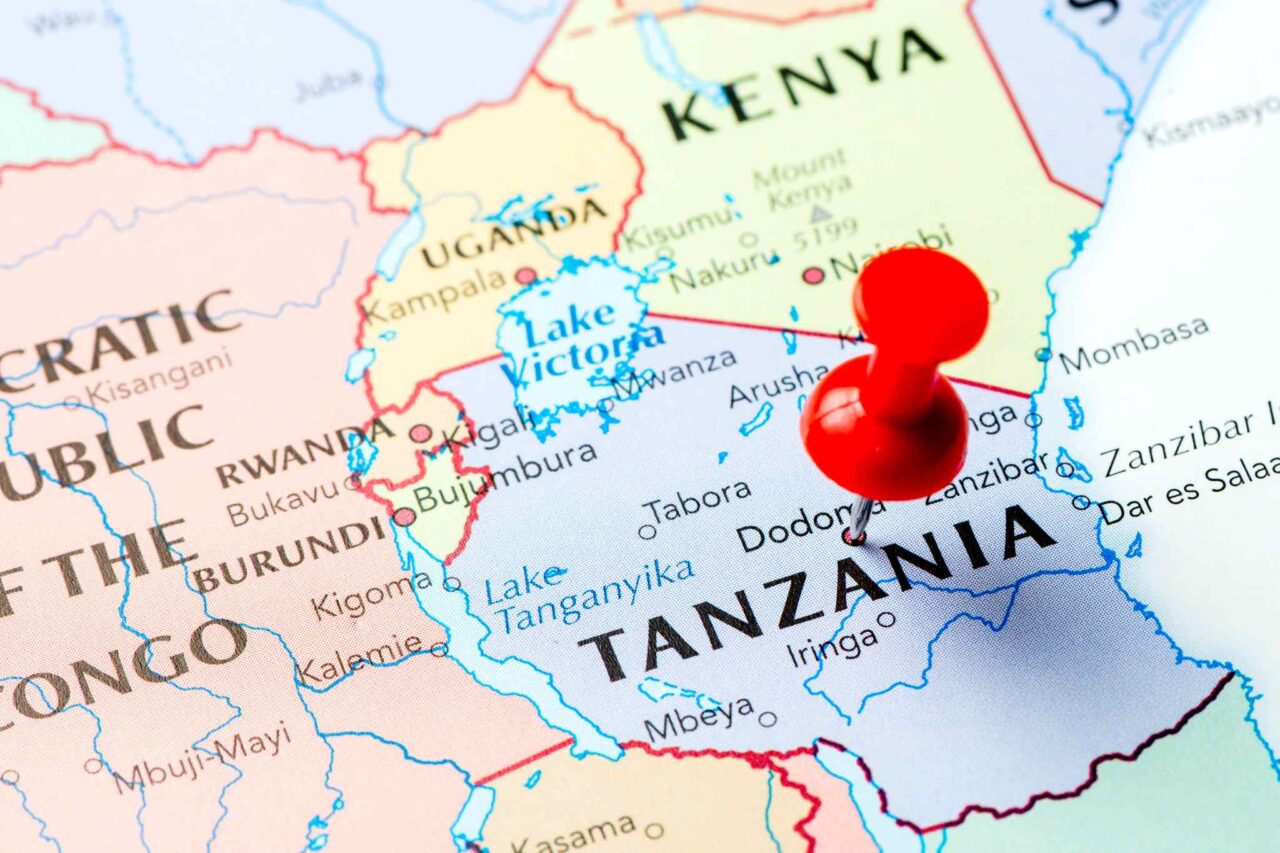
So where did the Tanga deal fall apart? To answer that, we need to look at the parties involved.
At the April 23, 2026 meeting, Dangote set only one condition for building the refinery: a commitment from the presidents. In practice, such a commitment would cover issues like protection against dumping, a challenge the Lekki refinery faced from the outset.
“Even now I can give commitment to the two presidents that are here, if they will support the refinery, we will build the identical one that we have in Nigeria,” Dangote said in April 2026.
After the event, President Ruto visited Tanzania and campaigned intensively for a refinery in Tanga. From the State House, parliament to business conferences, it was a pitch unlike any we have seen from a president. By the end of his trip on May 5, 2026, the refinery was big news across the continent, yet Ruto’s pitch did not seem to place it at the centre of Tanzania’s plans, and he left without securing any commitment.
Four days later, by May 9, 2026, Dangote told the Financial Times that he was leaning towards Mombasa rather than Tanzania, though he indicated that the ball was in Ruto’s court. Ruto, at that point, was still trying to convince Tanzania.
READ: Tusijidanganye: Why Tanzania Must Still Win the Dangote Refinery
Here we need to understand Dangote’s ambitions and how he sees things. He has said several times that he has moved beyond making money and is now focused on industrialising the continent. So a project like an East African refinery, however complex, is one he will pursue as long as it makes business sense and his companies can back it.
But he has repeatedly named two things that are deal-breakers for him. The first is a lack of government support or political will. His experience at home, where he had to fight for land, fight dumping and even fight for raw materials, is evidence that political will and practical government commitment are essential. He made this clear at the groundbreaking ceremony.
“Projects of this magnitude are never built by companies alone,” Dangote said during the ground breaking ceremony. They require partnership. They require trust. They require infrastructure. They require institutions that understand that private investment and national development mutually reinforce one another.”
The second is that he does not pay bribes for his projects. He explained this in a television interview in which he was pressed on why he had earlier walked away from investing in Kenya.
“Corruption takes two people to activate it: the person asking and the giver. We don’t give, because we believe we are bringing in jobs and prosperity, so why should we give [bribes],” Dangote told Kenya’s Citizen TV.
So although Dangote said he was leaning towards Mombasa, he left the decision with Ruto. He valued the political will Ruto had demonstrated and saw it as an asset. Ruto himself was less sure of the technical case for Kenya, knowing that little crude had been found there and that Tanga was already ahead. For Dangote, however, the key factor was political will, and Ruto had it in abundance.
By May 11, 2026, Ruto was retreating from the Tanzania plan, so he made an announcement for a study of the best location.
“That East African facility is an investment that the government of Kenya, the government of Uganda, the government of Tanzania, we have agreed that we want to develop a facility that is going to assist us with our fuel products,” Mr Ruto told participants at the Africa Forward Summit on May 11, 2026.
READ: After Pamoja Bid, Is a ‘Pamoja Refinery’ Coming Soon in East Africa?
“That is why we have asked Aliko Dangote here to do research. We have the port of Tanga, we have the port of Mombasa, we have the port of Lamu, and the rest in between. Wherever they will find the most suitable location,” Ruto said. “From our perspective, because the crude pipeline was going to Tanga, we thought that was the best location. But we will not dictate to Aliko Dangote and the investors.”
By May 28, 2026, Ruto had abandoned the Tanga idea altogether and committed to building the refinery in Kenya. Dangote has successfully managed to build Ruto’s confidence that a refinery can be built, just like Singapore, where it doesn’t have crude reserves but supplies fuel globally. On July 7, 2026, the Dangote Group announced that it had selected Kenya. Lamu’s proximity to South Sudan, along with Somalia’s vast oil potential, moves it from a probable energy hub to a real one.
Business unusual?
One of the lines most often used to market Tanzania’s Vision 2050 is that we must abandon business as usual and embrace “business unusual.” The speed with which the Dangote refinery has moved is exactly the speed one would have expected from Tanzania in securing a US$16 billion investment. Deals of this size come along perhaps once in a generation, and their impact is transformative. Dangote himself spoke to how fast the project has moved.
“This is the second fastest project we have actually launched after the fertiliser in Gode, Ethiopia. So, Your Excellency President Ruto, I must really congratulate you. I don’t know really what magic you use on me, but you can see that we already have more than 110 pieces of equipment, and we have 400 additional equipments that will arrive in the next 60 days,” Dangote said.
So why was there no interest in, or commitment to, a project of this magnitude? It is a mistake that cannot easily be corrected, because there are no US$16 billion investments lying around waiting to replace it. Museveni has said he wants to find out why the Tanga deal fell apart.
“We had discussed with Mama Samia to build the refinery in Tanga, but there were some problems. I don’t know what happened. So I want to check on that one first, because this one I support, but I will not invest yet,” Museveni said during the ground breaking ceremony in Lamu on September 30, 2026.
“I want to discuss with Samia and His Excellency [Ruto] to find out what happened to that refinery in Tanga, what the problem was, so that we harmonise. But otherwise, I really support this. Even if we have a small refinery in Hoima, a 60,000 one, another one in Tanga is no problem, another one here, very good, because we need more than just two or three refineries,” he added.
Tanzanian officials should join Museveni in asking, and answering, how the Tanga refinery slipped away. Some will point to the recently signed agreement with one of Tanzania’s international petroleum product suppliers, on developing the Tanga energy hub, suggesting it is meant to deliver a refinery.
READ: Tanzania Banks on Private Sector to Drive Vision 2050
But that agreement is non-binding, with no clear commitment on what will be built, when or how. Beyond its fuel import business, the company in question has shown no real interest in building a refinery in Tanzania. In my view, the MoU is designed to support the existing import business rather than any industrial ambition.
Meanwhile, many accept that what Dangote achieved at Lekki was nothing short of the impossible. The Nigerian refinery’s success, along with its successful IPO, supports the bankability of his next projects and sweetens the prospects for Lamu. On top of that, Kenyan and Rwandan governments are expected to invest, and I believe Uganda will follow.
An East African refinery
Despite the regional competition, the Lamu refinery is still good news for the region. As far as energy security goes, Tanzania should support it more than it supports the companies selling it fuel from the Gulf.
Tanzanian officials should approach the refinery strategically. It is better to hold a stake than not; better to be a player than a spectator, especially given how unpredictable the world has become.
For how the refinery played out, we can only blame ourselves. How we engage with it from here is another matter altogether. Perhaps Tanzania can join Kenya and Rwanda as shareholders, as Dangote has suggested.
As Dangote put it during the groundbreaking ceremony: “One of Africa’s greatest economic weaknesses has been our tendency to think within borders while the rest of the world thinks in markets. Kenya alone is a significant market, but East Africa is a greater opportunity. The refinery is therefore not simply about one country. It is about a region.”
He added: “The refinery will not only provide security and supply but will also bring prosperity. We have earmarked up to 30 per cent of equity for the East African countries to ensure that they will also share in the profit that will be generated from the supply and also export.”
Tony Alfred K is an analyst working with The Chanzo. He can be reached at tony@thechanzo.com and on X @tonyalfredk. These are the writer’s own opinions, and they do not necessarily reflect the viewpoint of The Chanzo. Do you want to publish in this space? Contact our Editor at editor@thechanzo.com.

One Response
Tanzania should focus on developing nuclear energy, Solar energy and harness gas resources, geothermal and hydro. The future is in renewable energy. For the transport sector the future is in e-mobilty, and fossil fuels are an expensive way of migrating to e-mobility. We lost the refinery, which in reality was going backwards.
The cost of raw photovoltaic (PV) modules and solar panels has fallen by 80% to 85% globally in the last ten years. Module prices are now well below $0.15–$0.20 per watt for wholesale utility-scale panels. Tanzania receives an average Global Horizontal Irradiation (GHI) of 4.5 to 7.0 kWh per square meter per day. There is no reason whatsoever to fight for a fossil fuel which will further entrench our energy independence. why we are still focused on fossil fuels? The loss of the Refinery is a blessing in disguise. Let us refocus and step ahead to where those who are investing refineries will also aspire to be in the future.