
Dar es Salaam – The High Court on November 6, 2026, sentenced CHADEMA national chairperson Tundu Lissu to four years in prison for incitement after finding that the prosecution had failed to prove the treason charge on which he had been tried.
The three-judge panel, led by Judge Dunstan Ndunguru, held that the evidence did not establish an intention to intimidate the government, an essential element of treason. However, it found that Lissu’s remarks calling for the obstruction of the 2025 election amounted to incitement, which it treated as a lesser, related offence.
The decision removed the prospect of a death sentence in the treason prosecution but did not secure his release. Lissu challenged the substitution, accused the judges of political persecution and requested bail pending appeal, including to attend the funeral of his elder brother, Alute Mughwai Lissu.
“I was not charged with incitement,” he said in an extended address before sentencing. “I am completely innocent,” he insisted, making clear that his submissions should not be understood as an apology or admission of wrongdoing.
The court’s position was that the trial evidence had centred on incitement and that Lissu had therefore had notice of the lesser offence and an opportunity to defend himself. That finding became the central disagreement between the panel and the opposition leader after the treason case failed.
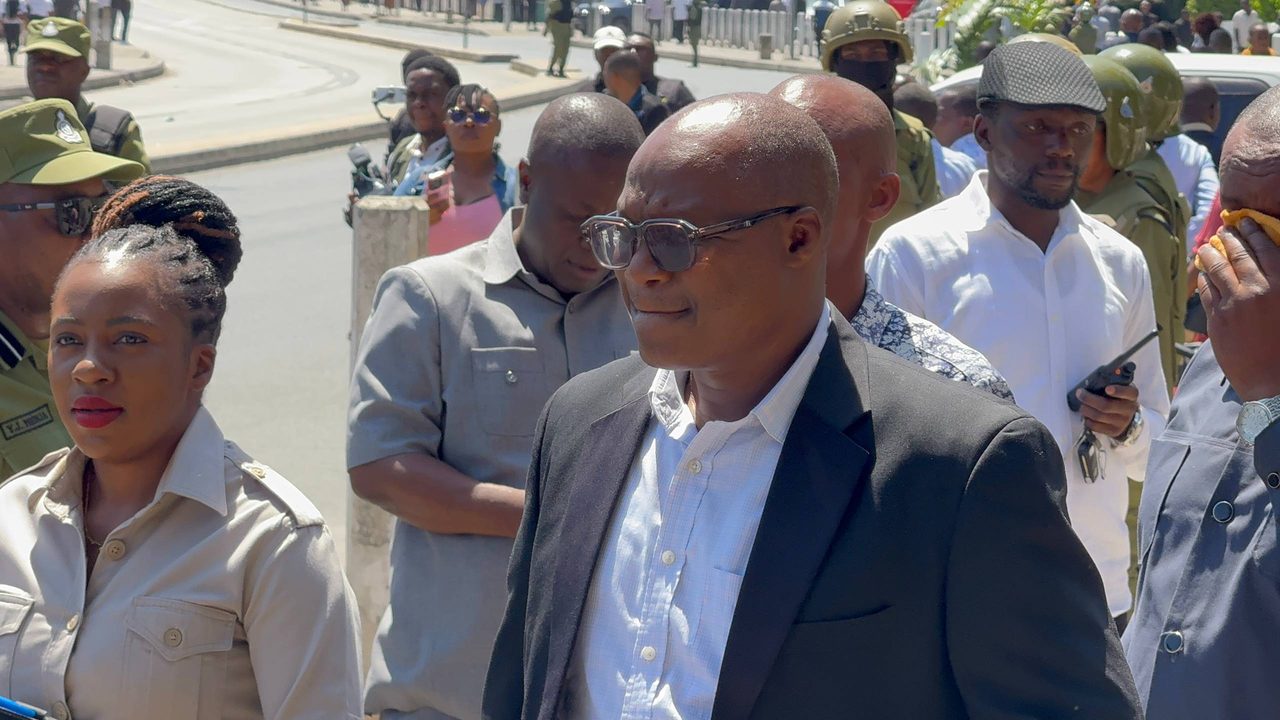
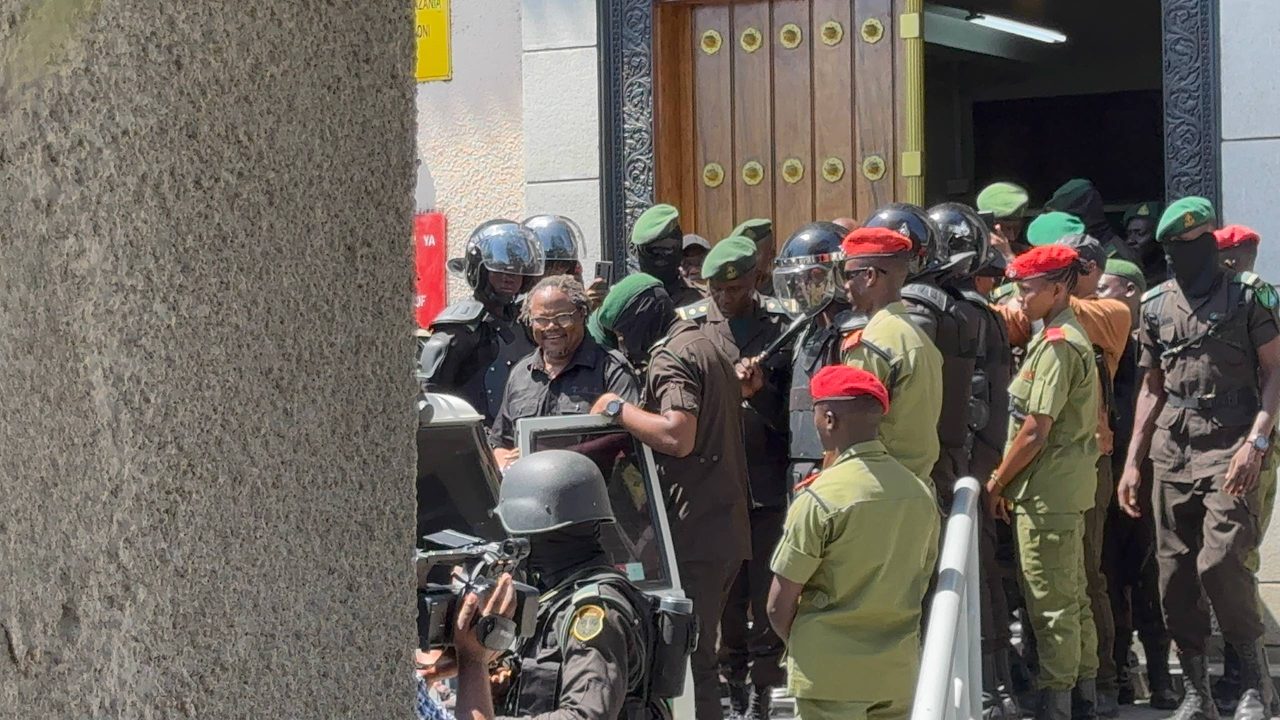
The courtroom was filled early, with relatives, journalists and dozens of advocates attending. Lissu entered declaring “Tutafika,” meaning “We will get there,” before telling the judges he was ready to hear their decision.
The original charge
The prosecution concerned remarks made at an April 3, 2025 meeting in Dar es Salaam, during CHADEMA’s No Reforms, No Election campaign. The indictment alleged that Lissu intended to mobilise the public to obstruct the election in order to intimidate the executive, and manifested that intention by uttering and publishing the disputed words.
READ MORE: Tundu Lissu Closes Defence After Saying DCI Kingai Will Not Testify
The passages included references to mobilising rebellion and disrupting the election. Lissu’s defence was that the statements expressed a political position seeking constitutional and electoral reforms, rather than an intention to commit treason.
Under Section 39(2)(d) of the Penal Code, the relevant offence requires an intention to bring about intimidation of the executive, legislature or judiciary, together with a manifestation of that intention. Conviction under the treason provision carries the death penalty.
The prosecution called 17 witnesses. Lissu conducted his own defence, testified himself and called four other witnesses; the defence also submitted 16 exhibits.
Reading the judgment, Ndunguru began by emphasising that the prosecution bore the burden of proving its case, that a conviction could not rest on weaknesses in the defence, and that suspicion could not replace proof.
The panel considered whether Lissu owed allegiance to the United Republic, whether he formed the alleged intention, and whether he manifested it through the statements and their dissemination.
Before addressing those issues, the judges rejected his renewed objections to the indictment. Lissu had argued that its reference to the “public,” rather than a person or group, departed from the statutory wording, and that it inadequately identified the institution allegedly threatened and the required specific intention.
The court held that the statutory definition of “public” included a person or group, that the reference to the “executive” was intelligible, and that the indictment provided sufficient information for Lissu to understand and answer the case. It also noted that it had previously ruled on the objections.
READ MORE: Court Blocks Bid to Re-question Heche as Lissu Eyes DCI Testimony Friday
The first substantive issue presented no dispute: Lissu was a Tanzanian citizen who owed allegiance to the United Republic. The disagreement lay in what his words proved about his intention.
Why treason failed
The judges said the prosecution had to establish an intention to intimidate the government, distinct from political criticism or pressure for reform. It had relied on interpretations of Lissu’s remarks by its witnesses, including police witnesses and a witness who described plans to attack voters with stones.
Lissu and his witnesses maintained that the remarks had to be understood in the context of CHADEMA’s political campaign. The court found that the prosecution’s interpretations did not provide sufficient concrete evidence of the intention required for treason.
The panel distinguished attempts to pressure the government into making reforms from intimidation under the treason provision. It also said provocative speeches seeking political change did not necessarily constitute criminal conduct.
On dissemination, the court accepted that Lissu had spoken publicly and that the meeting had been broadcast. But it agreed with him that appearing on Jambo TV did not establish that he personally uploaded or published the footage on the broadcaster’s YouTube channel.
“Merely appearing on Jambo TV does not necessarily mean that Tundu Lissu uploaded it,” Ndunguru said. The court found no evidence establishing his personal role in uploading the material.
Nevertheless, the judges did not accept that the absence of video footage automatically invalidated the oral evidence. They said the testimony of the journalist who attended the meeting could establish that statements were made publicly, particularly where Lissu did not deny uttering them.
READ MORE: Letters, Radio Clip Challenge Heche’s Account as Lissu Treason Trial Cross-examination Continues
That distinction mattered to the outcome: the court rejected the proof of treasonous intention but retained evidence about the statements themselves. It then examined whether that evidence disclosed another offence.
The substituted offence
The panel relied on Section 319(1) and (2) of the Criminal Procedure Act, which permits conviction for a minor offence included in, or established by facts reducing, the offence charged, even when the accused was not separately charged with it.
Referring to the Court of Appeal’s decision in DPP v Zombe, the judges said substitution was not automatic and had to respect an accused person’s right to be heard. They nevertheless considered incitement to be a “cognate” offence, meaning an offence sufficiently related to the alleged treason to fall within that procedure.
The court found that Lissu’s public statements sought to encourage obstruction of the election through non-peaceful means. It referred to witnesses who said they had been influenced by his words and joined others intending to disrupt the election.
The judges also said the defence had not explained how it intended to prevent the election or mobilise rebellion. They considered incitement a component of the case Lissu had answered, so a separate charge was unnecessary.
“The court believes that the accused had notice of the lesser offence and therefore had an opportunity to defend himself,” Ndunguru said. The panel found him guilty under Section 390 of the Penal Code.
The section makes soliciting or inciting another person to commit an offence criminal even if the solicitation or incitement has no effect. It does not itself prescribe a sentence, a point that became important in the submissions that followed.
READ MORE: Prosecution Tests Heche’s Evidence as CHADEMA Vice-chair Concedes Many Claims Were Second-hand
The result differed from Lissu’s closing argument in September, when he maintained that the treason case could end only in conviction or acquittal, not conviction for a lesser alternative.
After consulting his legal advisers, he told the panel that it had instead created a route to imprison him after the prosecution failed to prove its original allegation. He described the case as an attempt to turn a criminal court into “an arena for political warfare” and accused the judges of acting on political instructions.
He compared his treatment to the colonial-era prosecution of Jomo Kenyatta, accusing the judges of punishing an innocent political opponent to satisfy those in power. “History has not been kind to judges who have turned their courts into places for punishing innocent people,” he said.
Lissu’s claims of political interference were allegations, not findings of the court. The panel’s stated basis for the conviction was its assessment of the evidence and the legal power to convict for a lesser, related offence.
Sentencing dispute
State Attorney Nassoro Katuga asked for a severe sentence that would deter Lissu and others. He argued that incitement damaged public peace and economic activity, contributed to destruction of property, and left citizens afraid to conduct their daily business.
Katuga said police information showed an increase in incitement undertaken for political or economic interests, although he did not give a numerical breakdown in his submissions.
He also invited the judges to consider retired Chief Justice Mohamed Chande Othman’s presentation on the election violence, saying statements by some politicians had been identified among its causes.
READ MORE: Heche Tells Court Lissu’s Disputed April Speech Repeated CHADEMA’s Election-Reform Campaign
Lissu challenged that invitation, arguing that Chande had not testified in the case and that his presentation had not been introduced as evidence. He questioned how the prosecution could use violence occurring months after his imprisonment to support a harsher sentence for the statements at issue.
“That speech is not part of the evidence in this case,” he said. “Chief Justice Othman Chande has not come here to testify and establish which politicians made those statements.”
“You are covering mass murderers,” Lissu further alleged, arguing that those responsible for the October 2025 killings would use the conviction to claim the instigator had been punished. He said the decision would not conceal the truth or prevent accountability elsewhere.
That contention was separate from the legal finding against him: the court convicted him of incitement, not murder. It did not announce a finding that he was responsible for all the election deaths.
The Chande commission’s public presentation reported 518 deaths, while cautioning that the figure was not final. A separate commission led by Shaban Ali Lila was subsequently established to investigate criminal responsibility, including allegations of excessive force.
On punishment, both sides addressed Section 35 of the Penal Code, which provides for up to five years’ imprisonment, a fine or both, where no express penalty is prescribed. Lissu cited Salum Shaban v Republic and other authorities in arguing that the availability of a fine required the court to consider that option first.
He said he had never previously been convicted of a criminal offence, despite prosecutions extending back to 2002. The court subsequently treated him as a first offender when explaining its sentencing decision.
Health and bereavement
Lissu told the judges that he had spent 577 days in custody under the threat of capital punishment. “After 577 days with the dark cloud of the death penalty hanging over my head, you have now called me an inciter,” he said.
READ MORE: Court Rejects Lissu Bid to Call President, But Summons IGP, CDF and DCI in Treason Trial
He asked them to consider that period in prison, his health and his family responsibilities. He recalled serving as an elected MP twice, undertaking national service and leading the Tanganyika Law Society, presenting those roles as evidence of his public service.
Lissu also urged the judges to consider the conditions he had experienced in prison. “It is not the Sheraton Hotel,” he said.
Describing his health, Lissu said he had undergone 25 operations, still carried a bullet from the 2017 shooting, and had diabetes. He said his detention had caused him to miss four medical appointments at the university hospital in Leuven, Belgium, where he had received treatment.
He also referred to restrictions on access to legal advisers, party colleagues and religious support while in prison. In a separate October 16 judgment, another High Court panel found violations of confidential lawyer-client access, but did not grant all the broader declarations sought over political visits and other alleged restrictions.
His most personal submission concerned Alute, who died on November 1 after a long illness. Lissu described his elder brother as the person who had raised him and helped make him a lawyer.
“Because I could not nurse him, I had hoped that I would get an opportunity to bury Mzee Alute,” he told the judges. He asked them to take the bereavement into account as a family obligation relevant to sentencing.
Relatives had delayed the funeral programme to attend the judgment, hoping he would be freed to join them. Burial is scheduled for November 10 in Mahambe village, Singida.
Maintaining that incitement was bailable, Lissu requested release pending appeal so that he could challenge the conviction outside prison and attend the burial. “I said I was not asking for forgiveness, but I am asking for bail,” he said.
Four-year term
Ndunguru said the court had considered Lissu’s health, his status as a first offender, the submissions about a fine and his request for bail pending appeal. The panel acknowledged that a fine was ordinarily the first option to consider where the law provided both a fine and imprisonment.
READ MORE: Lissu Calls CHADEMA Vice-chair as Defence Links ‘No Reforms’ Campaign to Election Grievances
However, the judges referred to the protection of other people’s rights under Article 30(1) of the Constitution and said obstructing an election infringed those rights. They imposed a custodial sentence rather than a fine.
“The court sentences the accused to serve four years’ imprisonment, and you have the right to appeal,” Ndunguru said before the judges left the courtroom.
The proceedings ended without an announced grant of bail. Although Lissu had asked the court to consider his time in custody, the sentencing pronouncement did not specify how that period would be reflected in the four-year term.