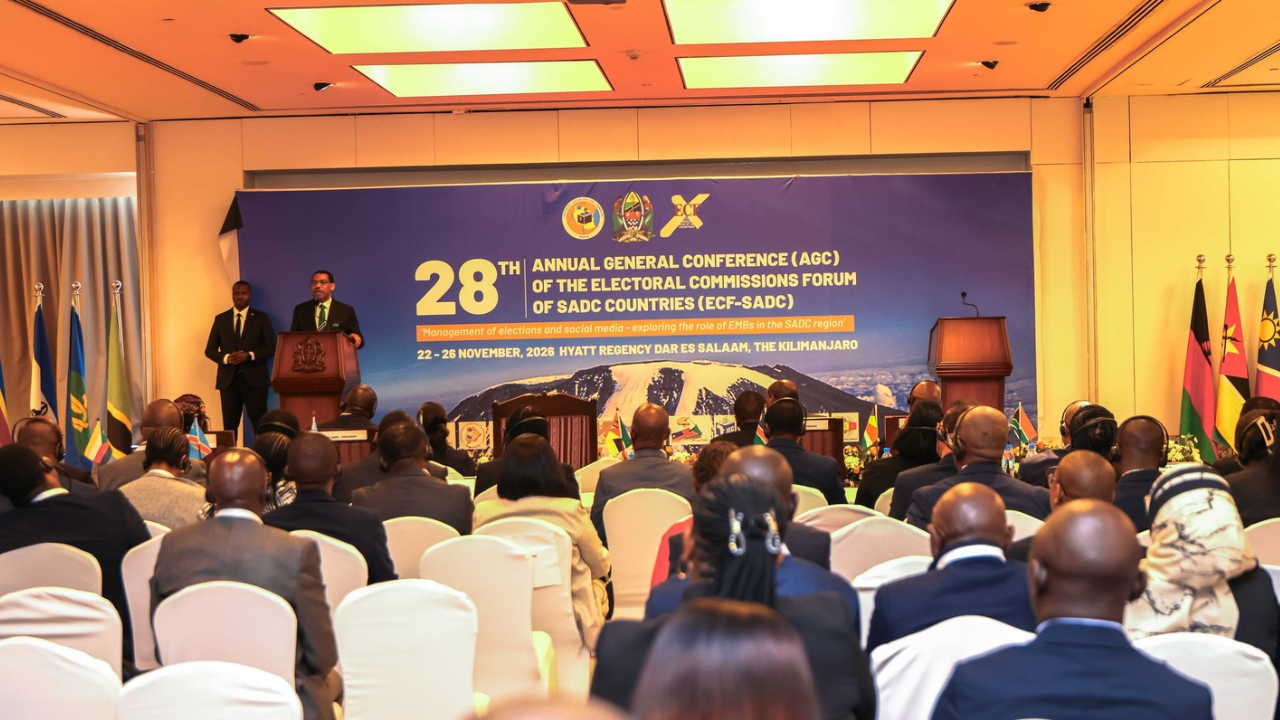

Dar es Salaam – Tanzania is reviewing its public-private partnership law to strengthen domestic participation in major projects, David Kafulila told editors who questioned access for local investors, consultation over user charges and disclosure of contract terms.
Kafulila, the PPP Centre’s executive director, said he expected substantial changes in 2027, including measures addressing local participation. Monday’s meeting focused on roads and buildings, which he described as important sectors for infrastructure investment.
“The PPP law is being amended,” he said. “Next year we will have major changes,” he added, identifying domestic participation among the areas being considered.
He also advocated wider acceptance of charges for using infrastructure, citing Kigamboni’s existing toll and suggesting that users should accept payments at Tanzanite and Busisi bridges and privately financed roads. His remarks did not constitute an announcement of approved tariffs or implementation dates.
“Taxes and borrowing cannot take us there,” he said, arguing that the scale of investment needed required private capital alongside government financing.
Local participation
Under Tanzania’s PPP framework, partnerships are long-term contracts for public infrastructure or services, with agreed responsibilities and risks. Private partners can recover their investment through government payments, charges paid by users, or a combination of both.
READ MORE: David Kafulila Advocates for PPPs to Reduce Tanzania’s Reliance on Borrowing for Development
Investor and journalist Masoud Kipanya asked whether officials were deliberately building Tanzanian companies capable of undertaking large projects, rather than expecting such firms to emerge without support.
Editors also questioned whether local-content requirements and skills transfer were producing domestic businesses able to compete with foreign contractors.
Kafulila acknowledged the concern, saying participation should extend beyond supplying sand and other construction materials. He cited financing disadvantages faced by local firms and said procurement reforms were also being considered, while stressing the need to balance domestic preferences with quality and cost.
He distinguished an ordinary contractor, paid by the government to build infrastructure, from a PPP investor who must mobilise capital and financing and recover the investment over time. Preferential treatment alone would not remove the requirement for a domestic bidder to raise the necessary funds, he said.
Michael Noel, an editor with Star TV and Radio Free Africa, asked whether the centre could guarantee loans for promising local start-ups seeking partnerships. Kafulila discussed lending risks and existing financing interventions but did not announce a centre-backed guarantee scheme.
Consultation and charges
Kipanya questioned when users were brought into decisions about tolls, warning against introducing charges only after infrastructure had been completed.
READ MORE: Tanzania’s Sh89 Trillion Plan Rests on Private Capital
“Do we involve them during planning, or only at the very end, when the bridge is finished, and we tell them to start paying?” he asked.
Kafulila said community engagement was mandatory and cited consultation and willingness-to-pay research undertaken for the bus rapid transit system. He acknowledged that such engagement did not necessarily mean every potential user would know what had been discussed.
Participants also questioned coordination between ports and connecting roads, and why some BRT buses were reportedly not being deployed. Kafulila said commercial viability, contractual arrangements and infrastructure readiness could constrain operations, with further work needed to address those challenges.
Asked about allowing private cars to pay to use BRT lanes, he said the proposal required examination for practicality and its implications for existing contracts. He did not announce approval for private vehicles to use the dedicated lanes.
Contracts and results
A participant from the University of Dodoma asked which ten PPP projects Kafulila said had been signed, their values, how many were operating and what benefits citizens had received beyond the signing of agreements.
The participant also questioned how people could verify assurances that public assets were not being sold without access to contract conditions, including duration, revenue sharing, risks and the responsibilities of government and investors.
READ MORE: Tanzania’s Water Challenges Need More Investment—but Is PPP the Answer?
Kafulila named examples involving DP World, Adani, TAZARA and commercial developments in Ubungo and Kariakoo. He proposed a separate presentation covering the ten projects’ status, rather than providing a complete project-by-project account during his response.
“A PPP project is public property before, during and even after,” he said, explaining his distinction between partnerships and privatisation. However, he did not announce publication of the specific contract information requested.
Habari Leo’s Gloria Tesha asked how public understanding had been measured. Kafulila acknowledged that the centre’s assessment of improved awareness was not based on a scientific survey.
“The truth is that we have not carried out a study to establish what percentage understands,” he said, while citing increased parliamentary and media discussion as indications of greater awareness.
Private financing does not automatically eliminate public costs: the IMF warns that PPPs can postpone recognition of costs and expose government finances to significant risks. Tanzania’s legal framework expressly allows government guarantees and public financial support, making contractual obligations important alongside ownership assurances.
Major projects
Tanzania’s PPP portfolio includes operating concessions, projects under implementation and proposals still undergoing feasibility studies. Signing an agreement, securing financing and delivering a functioning service are distinct stages.
At Dar es Salaam port, Dubai-based DP World signed a 30-year concession with the Tanzania Ports Authority in October 2023 for multipurpose operations. Its initial investment commitment exceeded US$250 million, with potential expansion to US$1 billion including hinterland projects, figures that should not be read as money already spent.
Separately, Adani International Ports Holdings announced a 30-year concession for Container Terminal 2 in 2024. The Adani-led East Africa Gateway Limited consortium includes AD Ports Group and East Harbour Terminals Limited, while Adani’s October 2026 disclosure records continuing terminal operations and additional capacity under construction.
TAZARA, jointly owned by Tanzania and Zambia, signed its revitalisation concession with China Civil Engineering Construction Corporation in September 2025, involving approximately US$1.4 billion in committed investment.
The railway’s October 2026 update reported mobilisation and surveys, with contractual effectiveness requirements still outstanding, rather than a completed rehabilitation or operating handover.
Responding to a question about competition from Angola’s Lobito Corridor, Kafulila said TAZARA’s rehabilitation and stronger connections to the Democratic Republic of Congo were important to Tanzania’s competitiveness.
He also said the Igawa–Tunduma road was being converted from a contractor-financed construction arrangement to a PPP, with a fresh feasibility study being completed.
Land and safety
The Tanzania Buildings Agency described its pilot partnership with Galco at Temeke Mwisho, involving an inland container depot and warehouses, including facilities intended for hazardous goods. Officials said the project also involved rebuilding a school and local government offices.
READ MORE: HESLB Turns to Private Sector to Bridge Student Loan Gap
The agency said it had identified 149 sites for potential partnerships, advertised 38 on July 1, 2026, and received 47 applications undergoing assessment. Those applications were proposals, not completed partnerships.
Editors questioned how public land was valued and revenue divided, and what safeguards protected people near the Temeke warehouses, including pupils and users of ward offices.
TBA officials said land was valued as an equity contribution, with revenue shares negotiated using the project’s financial model and investment recovery period.
They said an environmental and social impact assessment had been conducted for Temeke, but did not present its findings or specific safety conditions during their answers.